The Case for Active B12
Vitamin B-12 is a critcal cofactor in the production of energy from fats and proteins, and is known for its critical role in cell growth, DNA synthesis, cell replication, and recycling of homocysteine – a potentially toxic oxidizing metabolite. In the diet, Vitamin B-12 is obtained only from animal proteins and requires intrinsic factor (IF) in the stomach to be absorbed.
When Vitamin B12 succeeds at entering the bloodstream it then must
be converted to an active coenzyme before it is beneficial to our
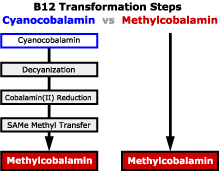
health. Three steps are required to convert the
manmade B12 you encounter in many vitamin supplements (called cyanocobalamin)
into methylcobalamin, the body ready coenzyme of B12 provided in the HS Fighters formula.
Step one of the conversion
sequence above is for your body to remove a molecule of cynanide from cyanocobalamin, although
the amount cyanide in this form of B12 is not considered toxic.
Dose for dose, there is substantially greater retention of
useable B12 when taking methylcobalamin as a supplement ingredient.
The amount of B12 (simple cobalamin) excreted in the urine
after a dose of methylcobalamin is about one-third that of
a similar dose of cyanocobalamin. It takes
approcximately 1-2 months for cyanocobalamin to be converted to active B12,
assuming an adequate supply of necessary cofactors is available.
Both the oral and the sublingual
forms of methylcobalamin B12 are identically effective at doses of at least
500 mcg.
|